The Daily Cycle That's Destroying Your Concrete
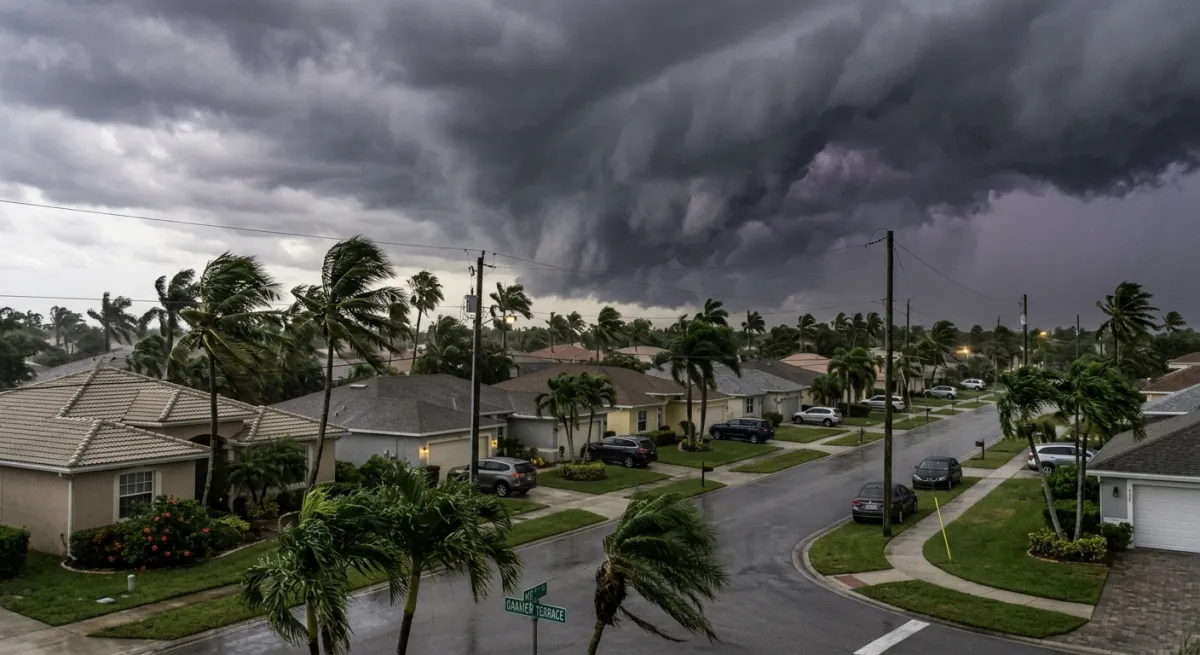
If you live in Palm Beach Gardens or anywhere in South Florida, you already know the summer drill. You wake up to blazing sunshine, humidity hits triple digits by noon, and then around 3 PM the sky opens up. Thirty minutes of torrential rain, and then the sun comes right back out. By the next morning, the concrete looks dry again.
What you don't see is the damage happening inside that concrete every single day.
That wet-dry-wet-dry cycle is one of the most destructive forces your driveway, walkways, pool deck, and patio will ever face. And unlike a single hurricane event, this damage is slow, cumulative, and easy to ignore — until it's not.
How Wet-Dry Cycles Attack Concrete
Concrete looks solid, but it's actually porous. Think of it like a really dense sponge. When rain hits your driveway, water doesn't just sit on the surface — it absorbs into the concrete itself. Sometimes a quarter inch deep, sometimes more, depending on the age and condition of the surface.
Here's where the damage starts:
The Expansion Problem
When concrete absorbs water, it expands slightly. When the South Florida sun bakes it dry again, it contracts. This expansion and contraction happens every single day during our summer rainy season — that's roughly 150 cycles between May and October.
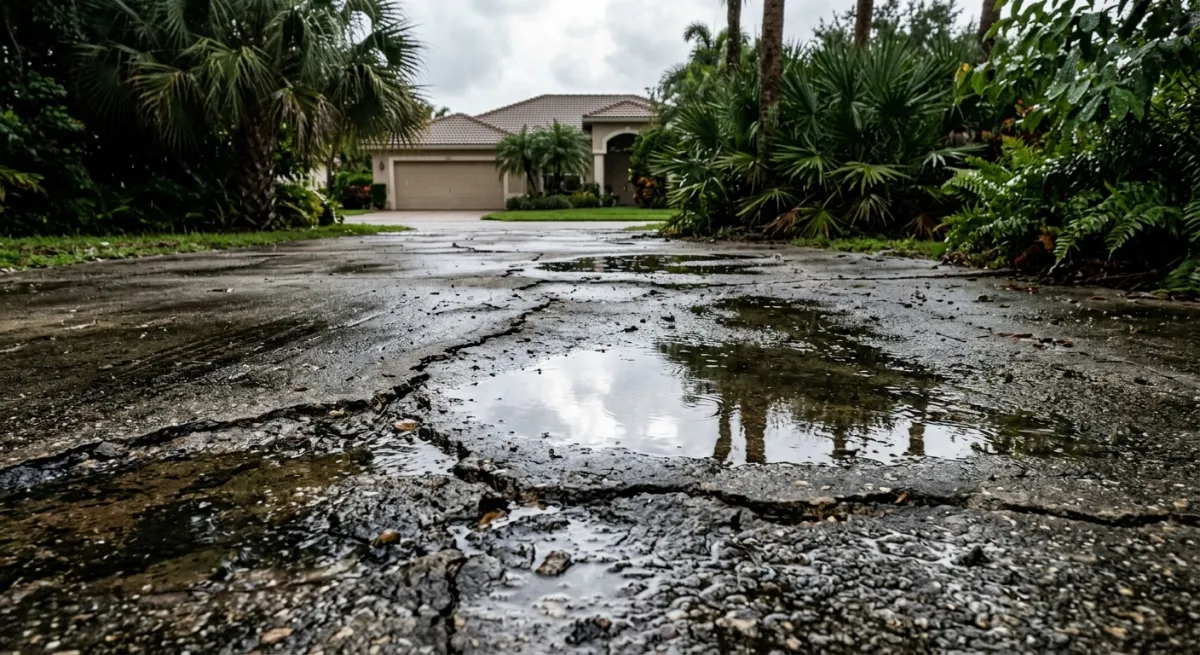
Over time, those micro-movements create micro-cracks. And once you have micro-cracks, water penetrates even deeper on the next cycle. The cracks widen. The surface starts to flake. What started as invisible stress becomes visible deterioration.
Efflorescence — The White Powder Problem
Ever notice white, chalky deposits on your concrete? That's efflorescence, and it's a direct result of the wet-dry cycle.
Here's what's happening: rainwater soaks into the concrete and dissolves minerals — primarily calcium hydroxide — from within the mix. When the water evaporates back out (thanks to our intense sun), those minerals get deposited on the surface as a white, powdery residue.
Efflorescence itself isn't structurally damaging, but it's a warning sign. It tells you that water is moving through your concrete regularly, carrying material out with it. Over time, this mineral migration weakens the concrete from the inside out.
For homeowners in Jupiter and Palm Beach Gardens, efflorescence is especially common on newer concrete because there are more free minerals available to dissolve. But even older driveways show it after heavy rain periods.
Spalling — When the Surface Pops Off
Spalling is that rough, flaky, pitted look you see on older concrete in South Florida. It happens when moisture trapped inside the concrete goes through repeated thermal cycles. The surface layer — which takes the most abuse from sun and rain — eventually loses its bond with the layers below.
Chunks start to pop off. Small areas become large areas. And once spalling starts, it accelerates because the now-rough, pitted surface holds even more water.
The frustrating part? Spalling is mostly preventable with proper sealing and maintenance. But once it's advanced, you're looking at resurfacing or replacement — not just cleaning.The Acid Rain Factor Nobody Talks About
Florida rain isn't pure water. It's slightly acidic, typically with a pH between 4.5 and 5.5. That's not dramatic — we're not talking about industrial acid rain — but over thousands of cycles, mildly acidic water absolutely affects concrete.
Concrete is alkaline (high pH). When acidic rainwater hits it repeatedly, a slow chemical reaction occurs. The surface gradually loses its alkalinity, becoming softer and more porous over time. This is why a 15-year-old driveway in Palm Beach County absorbs water noticeably faster than a new one.
But there's another acid source most people don't think about: your landscaping.
Organic Acids From Your Yard
When rain washes across your lawn, mulch beds, and landscaping before reaching your concrete, it picks up organic acids from decomposing plant material. Oak leaves are particularly acidic. So are pine needles, certain mulches, and fruit that drops from trees.
That runoff carries those organic acids directly onto your driveway, walkways, and pool deck. The staining you see from leaf tannins? That's just the visible part. The acidic residue is also slowly softening your concrete surface.
This is a huge factor for properties in Palm Beach Gardens with mature landscaping. Those beautiful oaks and tropical plants that make your property gorgeous are also contributing to your concrete's deterioration.
Joint Erosion in Pavers
If you have a paver driveway or patio — which is extremely common here in Palm Beach County — the wet-dry cycle attacks differently, but it's just as damaging.
Paver joints are filled with sand (or polymeric sand). Every time water rushes across your pavers, it carries a little bit of that joint sand away. Then the sun dries everything out, and the remaining sand settles and compacts. Next rain cycle, more sand washes out.
Over a summer season, you can lose a significant amount of joint material. When joints empty out:
- Pavers shift and become uneven — creating trip hazards
- Weeds and grass grow in the gaps — making your patio look neglected
- Water penetrates below the pavers — undermining the base material
- Ant colonies move in — creating tunnels that further destabilize the base
Why South Florida Concrete Ages Faster Than Anywhere Else
It's not just the rain. It's the combination of factors that makes our environment uniquely hostile to concrete:
1. Daily rain cycles — 150+ wet-dry cycles per summer 2. Intense UV radiation — breaks down sealers and surface treatments faster 3. High humidity — concrete never fully dries, even between rain events 4. Warm temperatures — accelerate chemical reactions and biological growth 5. Salt air (especially near the coast in Jupiter and along the Intracoastal) — chloride penetration corrodes rebar inside concrete 6. Biological growth — algae, mold, and mildew roots penetrate porous surfaces 7. Slightly acidic rain — slow but constant chemical attack
A driveway in Palm Beach County faces more environmental stress in one year than a driveway in the Midwest faces in five. That's not an exaggeration — it's chemistry and physics.
What You Can Do About It
The good news is that concrete deterioration from rain cycles is largely preventable. Here's what actually works:
Regular Professional Cleaning
Getting your concrete professionally cleaned removes the organic material, biological growth, and mineral deposits that accelerate deterioration. It's not just cosmetic — it's maintenance.
We recommend cleaning your driveway and hardscapes at least once a year, ideally in the spring before rainy season hits full force. This removes the buildup from the previous year and gives you a clean starting point.
Sealing Your Concrete
A quality concrete sealer is the single best investment you can make for your hardscapes. It creates a barrier that dramatically reduces water penetration, which means:
- Less expansion/contraction damage
- Less efflorescence
- Dramatically reduced spalling risk
- Better resistance to staining from organic acids
- UV protection for the surface
Proper Drainage
If water pools on your driveway or patio after rain, you have a drainage issue that's accelerating damage in those specific areas. Standing water means prolonged saturation, which means more expansion, more mineral migration, and faster deterioration.
Look for low spots, areas where the grade has settled, or places where landscape edging blocks water flow. Sometimes a simple grading adjustment makes a huge difference.
Joint Maintenance for Pavers
For paver surfaces, re-sanding joints annually prevents the cascade of problems that start with eroded joints. Polymeric sand is better than regular sand because it hardens and resists washout, but even polymeric sand breaks down over time and needs replenishing.
Don't Wait for Visible Damage
The biggest mistake we see homeowners in Palm Beach Gardens and West Palm Beach make is waiting until damage is visible to take action. By the time you see spalling, significant cracking, or severe efflorescence, the deterioration has been progressing for years.
Prevention is always cheaper than repair. A professional cleaning and sealing program costs a fraction of what resurfacing or replacing a driveway costs.
Get your free quote for professional concrete cleaning and sealing. We'll assess the current condition of your hardscapes and recommend a maintenance plan that protects your investment against South Florida's relentless summer rain cycle.