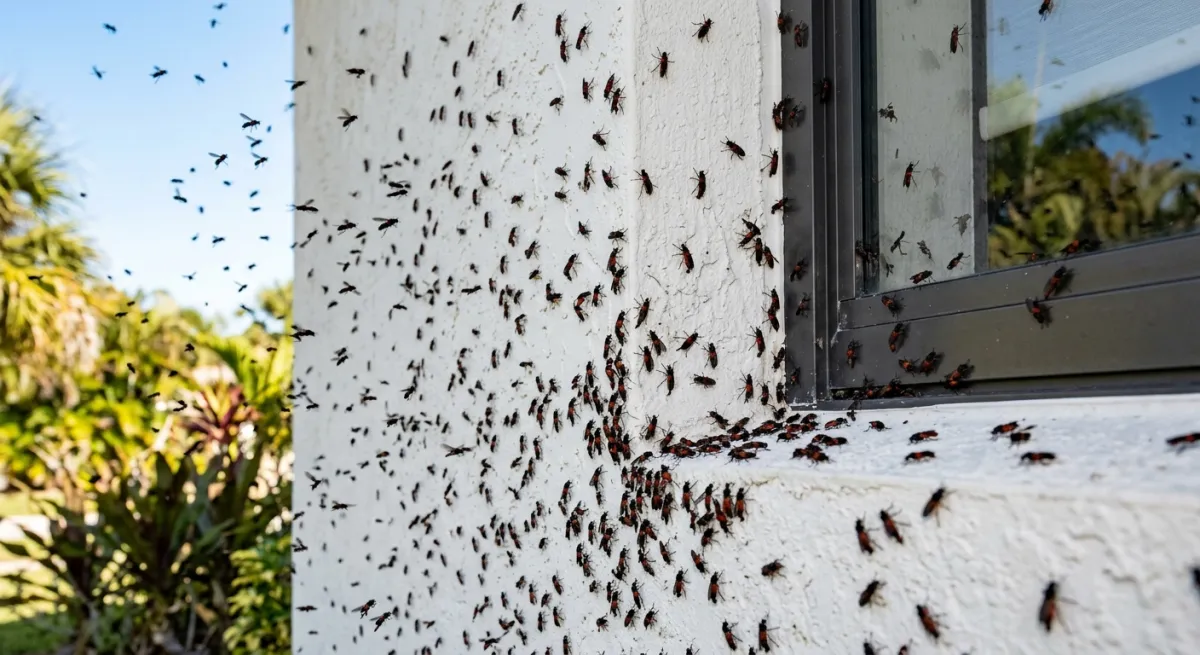
Love Bug Season Is Here Again
If you've lived in South Florida for more than one September, you know about love bugs. Those paired-up, slow-flying insects that blanket everything in sight twice a year — once in May and again in September. And if you've ever dealt with the aftermath, you know it's more than just a nuisance.
For homeowners in Palm Beach Gardens, Jupiter, and across Palm Beach County, love bug season means finding your white stucco walls splattered, your windows dotted with black smears, and your car looking like it drove through a bug hurricane. Which, honestly, it basically did.
But here's what most people don't realize: love bug residue isn't just ugly. It's actively damaging your surfaces while it sits there.
Why Love Bug Splatter Is More Than Cosmetic
Love bugs have highly acidic body fluid. When they splatter against your home's exterior, your car, your windows, or your pool screen, that acidic residue starts a chemical reaction almost immediately.
On painted surfaces, love bug acid begins etching the clear coat and paint within hours. In Florida's heat, the process accelerates — direct sun essentially bakes the acid into the surface. We've seen car hoods with permanent pitting from love bug splatter that sat for just a few days.
On stucco walls, the story is similar but slower. The textured surface of stucco traps the splatter in all those tiny crevices, making it harder to remove and giving the acid more surface area to work on. Left for a week or more, love bug stains on white stucco can become permanent discoloration.
On windows and glass, the acid etches the surface at a microscopic level. You might not notice it from one season, but year after year of love bug buildup without proper cleaning creates a haze that no amount of Windex will fix.
On screen enclosures, love bugs die on the mesh and their bodies decompose, leaving dark stains that can permanently discolor aluminum and fiberglass screening.
The 48-Hour Window
Here's the critical information: you have roughly 24-48 hours to remove love bug splatter before it starts causing permanent damage. After that window, the acidic residue has bonded with the surface, and what was a simple cleaning job becomes a much more difficult restoration project.
This timeline gets even shorter in direct sunlight. A south-facing stucco wall in Palm Beach Gardens that catches afternoon sun? That splatter is baking in within hours. A shaded north-facing wall gives you a little more time, but not much.
The takeaway is simple: don't wait. Don't tell yourself you'll deal with it when love bug season is over. By then, the damage is done.
How to Clean Love Bug Splatter Off Different Surfaces
The approach depends entirely on what surface you're dealing with. Using the wrong method on the wrong surface turns a cleaning job into a damage job.
Stucco Walls
Stucco is the most common exterior surface in Palm Beach County, and it's also one of the trickiest to clean love bugs off of. The textured surface holds onto splatter like Velcro.
What works:- Soft washing with a low-pressure sprayer and a surfactant-based cleaning solution. The surfactant breaks down the organic acids and the low pressure rinses it away without damaging the stucco texture.
- Pre-soaking is critical. Spray the affected area with a cleaning solution and let it dwell for 5-10 minutes before rinsing. This gives the surfactant time to break down the dried splatter.
- A soft-bristle brush can help on heavily affected areas, but use gentle pressure — scrubbing hard on stucco tears up the surface texture.
- High-pressure washing. You'll blast the splatter off, but you'll also blast off paint and stucco texture. Not worth it.
- Scraping with anything rigid. Stucco is soft enough that putty knives and scrapers gouge it.
- Waiting it out. Rain won't wash love bugs off stucco. The texture holds them in place.
Windows and Glass
Windows are easier to deal with if you get to them quickly.
What works:- A bucket of warm water with a few drops of dish soap and a microfiber cloth handles fresh splatter easily.
- For dried splatter, soak the area with the soapy water for several minutes, then wipe. Don't scrub dry — you'll scratch the glass.
- A razor blade scraper (held at 45 degrees) works on flat glass surfaces for stubborn spots, but never use this on tinted windows or impact glass coatings — you'll scratch the film.
- White vinegar solution works well as a follow-up to remove any remaining acid residue.
- Dry wiping. You're just grinding the acidic residue across the glass.
- Abrasive cleaners or Scotch-Brite pads. Glass scratches more easily than people think.
Painted Surfaces and Car Exteriors
Your car probably takes the worst beating during love bug season, especially if you're commuting along I-95, the Turnpike, or Northlake Boulevard.
What works:- Wash as soon as possible. Even a quick rinse at a gas station is better than driving around for days with splatter baking on.
- Bug and tar remover products (available at any auto parts store) are formulated to break down insect residue without damaging clear coat.
- A dryer sheet — yes, the laundry kind — dampened with water and gently rubbed on splatter works surprisingly well. The fabric softener helps break down the residue.
- Wax your car before love bug season. A fresh coat of wax creates a barrier that makes removal much easier.
- Picking or scraping dried bugs with your fingernail. You'll scratch the clear coat.
- Using dish soap repeatedly — it strips wax and can dull the finish over time.
Screen Enclosures and Lanais
Screen enclosures catch a tremendous number of love bugs, especially if you have outdoor lighting that attracts them at night.
What works:- A garden hose from both sides of the screen — rinse from the inside out, then outside in.
- For dried-on bugs, a soft brush with soapy water works on most screen materials.
- Professional screen cleaning with specialized equipment reaches high areas and does a thorough job without damaging the mesh.
- Pressure washing screens. Even moderate pressure can tear or stretch screen mesh, especially older screens that have been UV-degraded.
Prevention: Can You Keep Love Bugs Away?
Let's be honest — you can't prevent love bugs from existing. They're a fact of life in Florida. But you can minimize the impact:
Reduce Attraction
- Turn off unnecessary exterior lighting during peak love bug periods. Love bugs are attracted to light, particularly UV light. Switch to yellow "bug light" bulbs for your porch and entryway during September.
- Love bugs are attracted to light-colored surfaces and to heat radiating from surfaces. There's not much you can do about your white stucco house, but parking your white car in the garage helps.
- Love bugs swarm most heavily during mid-morning and late afternoon. If you can time your driving to avoid these windows, you'll reduce car splatter significantly.
Protective Coatings
- Car wax creates a slick surface that makes love bug removal dramatically easier.
- Ceramic coating on your vehicle is even better — splatter practically rinses off.
- For your home's exterior, a fresh coat of quality exterior paint makes surfaces smoother and easier to clean. It won't prevent splatter, but it prevents the splatter from bonding as aggressively.
Why a Mid-September Cleaning Makes Sense
Here in Palm Beach County, the September love bug season typically peaks during the first two weeks of the month and tapers off by the end of September. That makes mid-to-late September the ideal time for a thorough exterior cleaning.
By this point, the worst of the swarming is over, but the splatter hasn't been sitting long enough to cause permanent damage on most surfaces. A professional soft wash at this time accomplishes several things:
1. Removes love bug residue before it causes permanent staining 2. Kills biological growth (mold, mildew, algae) that flourished during the humid summer months 3. Prepares your home for the dry season and the winter social season — when you actually want your house looking its best 4. Addresses the accumulated grime from an entire summer of rain, humidity, and organic debris
Think of it as the end-of-summer reset for your home's exterior.
When DIY Isn't Enough
For a few love bug spots on your windows or car, DIY cleaning is perfectly fine. But if your entire home exterior — stucco walls, screens, windows, walkways — has taken a heavy hit from love bug season (on top of everything else summer throws at it), that's a lot of surface area to clean correctly.
The risks of DIY on a whole-house scale include using too much pressure on stucco, using the wrong chemicals on certain surfaces, and — frankly — spending an entire weekend on a job that professionals complete in a few hours.
We handle love bug aftermath as part of our regular exterior cleaning service. It's not an add-on or a specialty — it's just part of what happens when you clean a South Florida home in September.
Get your free quote for a post-love-bug-season exterior cleaning. We'll get your home looking sharp before the busy holiday season kicks in, and we'll make sure that love bug residue doesn't leave lasting marks on your investment.