Choosing and Maintaining Exterior Surfaces in Florida
If you're building, renovating, or just trying to understand why your house looks the way it does after a few years in South Florida, this guide is for you. We've cleaned thousands of homes across Palm Beach Gardens, Jupiter, and West Palm Beach, and we've seen every surface type in every stage of life — from brand new to "why didn't anyone maintain this?"
The truth is, no exterior surface is maintenance-free in Florida. Our climate is simply too aggressive. But some surfaces handle it better than others, and knowing what you're working with changes everything about how you maintain it.
Stucco — Florida's Most Common (and Most Misunderstood)
Drive through any neighborhood in Palm Beach County and you'll see stucco everywhere. There's a reason — it's affordable, versatile, and when properly maintained, it looks great. But stucco in Florida takes a beating.
How Stucco Performs
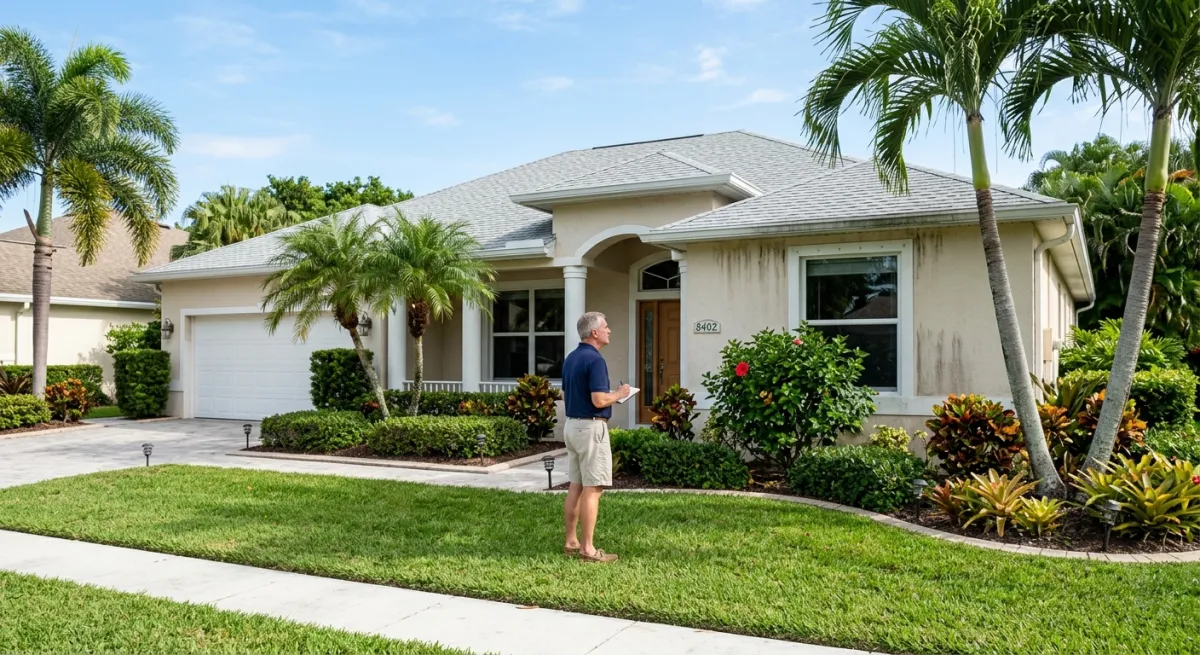
Stucco is porous, so it absorbs moisture. In South Florida's 80-90% humidity, stucco walls rarely fully dry out during summer months — creating ideal conditions for mold, mildew, and algae, especially on north-facing walls and areas shaded by trees. Florida's intense sun also degrades paint on stucco faster than in northern climates; expect to repaint every 5-7 years versus 10-15 up north.
Coastal properties take additional hits. Homes in Jupiter, along the Intracoastal, or within a few miles of the ocean see salt crystallization in the stucco pores that causes the surface to powder and weakens the bond between stucco and the underlying block. Biological growth is stucco's biggest weakness — the textured surface provides grip for algae, mold, and mildew, and once they establish they spread fast.
Maintenance Requirements
- Cleaning frequency: Every 12-18 months with professional soft washing
- Cleaning method: Low-pressure soft wash with biodegradable surfactants — never high-pressure, which damages the surface and drives water into the wall cavity
- Repainting: Every 5-7 years; always clean before painting
- Crack repair: Inspect annually; small cracks let water in and lead to bigger problems
- Effort level: Moderate — regular cleaning keeps it manageable
Common Failure Modes
Hairline cracks from settling are normal, but unrepaired cracks lead to water intrusion, which leads to mold inside the wall cavity. We see this frequently in homes built during Palm Beach County's construction boom years. The exterior looks fine until someone investigates that musty smell and finds mold behind the stucco.
Concrete Block (CBS Construction)
Concrete block with stucco finish is the backbone of South Florida construction. The block itself is incredibly durable — CBS (Concrete Block and Stucco) homes handle hurricanes far better than wood frame. But the exterior finish still needs attention.
How It Performs
The block itself handles humidity fine — it's the stucco coating over it that carries the same vulnerabilities described above. Where CBS genuinely excels is storm resistance: concrete block walls handle significant wind loads and debris impacts. After a hurricane, CBS homes typically need cosmetic repair, not structural. Biological growth follows the same pattern as stucco since the exterior surface is stucco. South Florida's sandy soil means some settling is inevitable; CBS handles minor movement well, but significant settling shows up as stair-step cracks in the block joints.
Maintenance Requirements
- Cleaning frequency: Every 12-18 months (same as stucco)
- Cleaning method: Soft wash
- Sealing: Block walls below grade should be waterproofed; above-grade surfaces benefit from quality paint as their "sealer"
- Effort level: Low to moderate — CBS is genuinely low-maintenance if you keep the stucco coating in good shape
Stone Veneer — Beautiful but Demanding
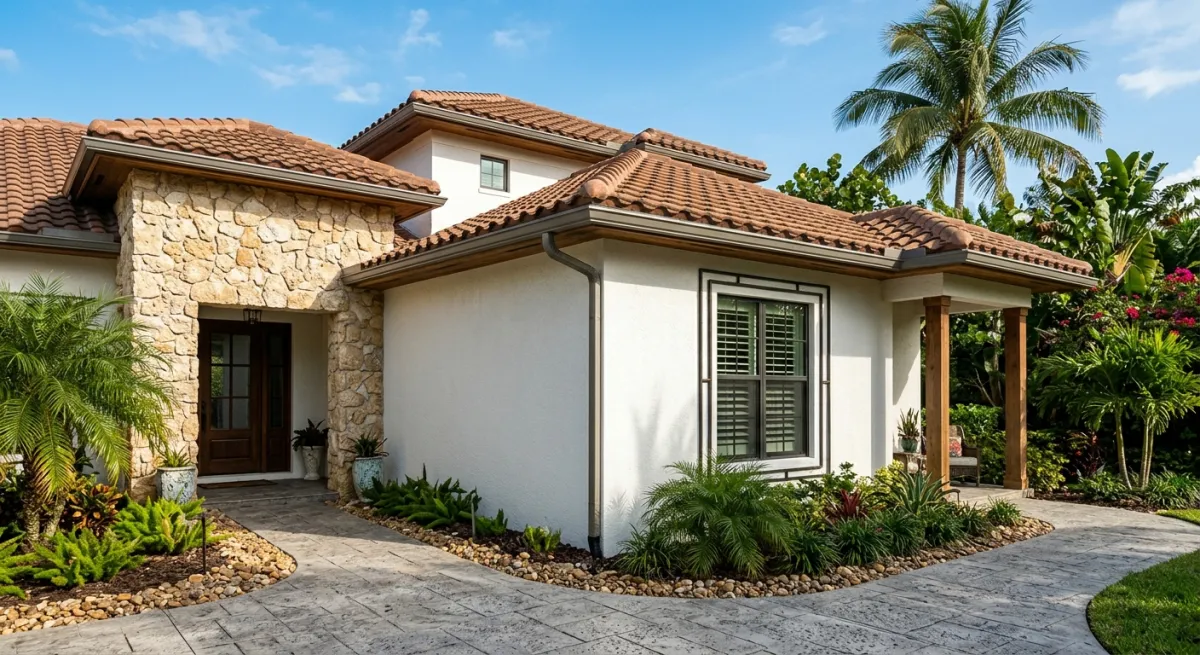
Natural stone and manufactured stone veneer have become popular accent features on Palm Beach Gardens homes, particularly around entryways, chimneys, and feature walls.
How It Performs
Natural stone ranges from nearly non-porous (granite, slate) to moderately porous (limestone, travertine); manufactured stone tends to absorb more moisture. UV performance is generally excellent — stone handles sun exposure better than most surfaces. Salt air is where you need to know your stone type: limestone and travertine are vulnerable to salt crystallization, while granite and engineered stone hold up well. The texture and joints in any stone provide growing surfaces for algae and mold, and dark or moist areas can develop heavy biological growth.
Maintenance Requirements
- Cleaning frequency: Every 12-24 months
- Cleaning method: Low-pressure wash with pH-appropriate cleaners (acid-based for mineral stains, alkaline for biological growth — but never acid on limestone or travertine)
- Sealing: Natural stone should be sealed every 2-3 years with a breathable penetrating sealer
- Effort level: Moderate to high — you need to know your stone type and use the right products
Common Failure Modes
The mortar joints between stones deteriorate faster than the stone itself. Water gets behind loose mortar, and in Florida's freeze-free climate, biological growth fills the gaps rather than ice. We see homes in BallenIsles and Mirasol where the stone looks great but the mortar is crumbling.
Fiber Cement Siding (Hardie Board)
James Hardie fiber cement siding has gained significant market share in Florida, and for good reason. It's one of the best-performing surfaces in our climate.
How It Performs
Fiber cement is engineered for moisture — it doesn't swell, warp, or rot like wood, and it releases absorbed moisture efficiently. The factory-applied finish on Hardie board holds up well, better than most stucco paint jobs; ColorPlus technology carries a 15-year fade warranty. Salt air performance is strong since the material doesn't corrode. The smooth surface also makes it harder for algae and mold to get a grip compared to textured stucco — growth still happens in Florida, but it's slower to establish and easier to remove.
The one real weakness is impact resistance. Fiber cement is rigid, not flexible, and can crack from debris, hailstones, or significant impact.
Maintenance Requirements
- Cleaning frequency: Every 18-24 months
- Cleaning method: Low-pressure wash or even garden hose with soft brush for light buildup; soft wash for heavier biological growth
- Repainting: Factory finish lasts 15+ years; field-painted boards need repainting every 7-10 years
- Caulk inspection: Check caulked joints annually — caulk fails before the siding does
- Effort level: Low — this is one of the lowest-maintenance options available
Aluminum and Vinyl Siding
Less common in Palm Beach County than in other parts of the country, but you'll find aluminum siding on older homes and some vinyl siding on newer construction.
How Aluminum Performs
The good: Doesn't rot, doesn't support biological growth on the metal itself, withstands moisture well. The bad: Dents easily, oxidizes over time (chalky white residue), and the original factory finish eventually breaks down. Salt air accelerates oxidation significantly — coastal homes in Jupiter can see oxidation within a few years. Maintenance: Clean every 12 months, restore oxidized finish with specialized aluminum cleaner, repaint when the finish is too far gone. Effort level: Moderate.How Vinyl Performs
The good: Doesn't rot, doesn't need painting, color goes through the material so scratches don't show. The bad: Warps in extreme heat (and South Florida delivers extreme heat), becomes brittle with UV exposure over 15-20 years, and light colors show mold and algae stains prominently. Maintenance: Clean every 12-18 months with soft wash. No painting needed, but no way to restore faded color short of replacement. Effort level: Low.The Maintenance Rankings
After cleaning thousands of homes across Palm Beach County, here's how we rank these surfaces by total maintenance effort in Florida's climate:
Least Maintenance Required
1. Fiber cement siding — Clean it occasionally and it just keeps performing 2. CBS/Concrete block — Robust structure; just maintain the stucco coating 3. Vinyl siding — Low effort, but limited lifespanMost Maintenance Required
4. Stucco (on wood frame) — Needs consistent cleaning and more frequent painting 5. Aluminum siding — Oxidation is a constant battle near the coast 6. Natural stone veneer — Beautiful but demands knowledge and the right productsCost of Maintenance Per Surface
Here's what you can expect to spend annually to keep each surface in good condition for an average-sized Palm Beach County home:
- Fiber cement: $300-500/year (periodic cleaning only)
- CBS/Stucco: $400-800/year (cleaning plus more frequent painting amortized)
- Vinyl: $250-400/year (cleaning only, but factor in replacement at 20 years)
- Aluminum: $400-700/year (cleaning plus oxidation treatment)
- Stone veneer (accent): $200-400/year for accent areas (cleaning plus sealing)
Which Surface Lasts Longest With Proper Care?
This is the question everyone wants answered:
1. Concrete block/CBS — The structure lasts essentially forever. Maintain the coating and it'll outlast the mortgage. 2. Natural stone — Quality stone with proper maintenance lasts generations. 3. Fiber cement — 50+ year lifespan with maintenance; the finish needs refreshing periodically. 4. Stucco coating — The coating needs replacing every 20-30 years, but that's a resurfacing job, not a rebuild. 5. Aluminum — 40+ years, but it looks tired after 20 without refinishing. 6. Vinyl — 20-30 years before UV degradation makes replacement necessary.
Every Surface Needs Cleaning (and the Right Method)
Regardless of what your home is clad in, professional cleaning is part of the maintenance equation in South Florida. Our humidity, rain, and warmth guarantee biological growth on every exterior surface. The question isn't if it needs cleaning — it's how often and with what method.
Using the wrong cleaning method on the wrong surface causes more damage than the dirt itself. High-pressure washing on stucco, acid cleaners on limestone, abrasive methods on fiber cement — we've seen (and repaired) it all.
Get your free quote for professional exterior cleaning tailored to your home's specific surfaces. We'll identify what you have, recommend the right approach, and keep your home looking its best no matter what it's made of.