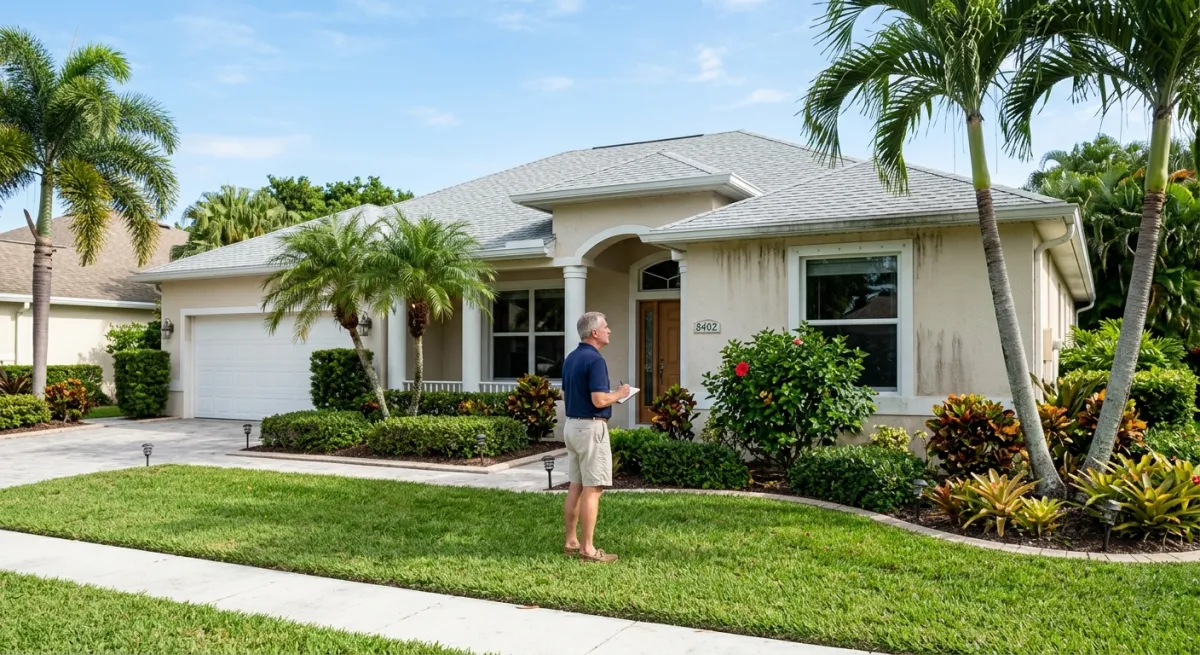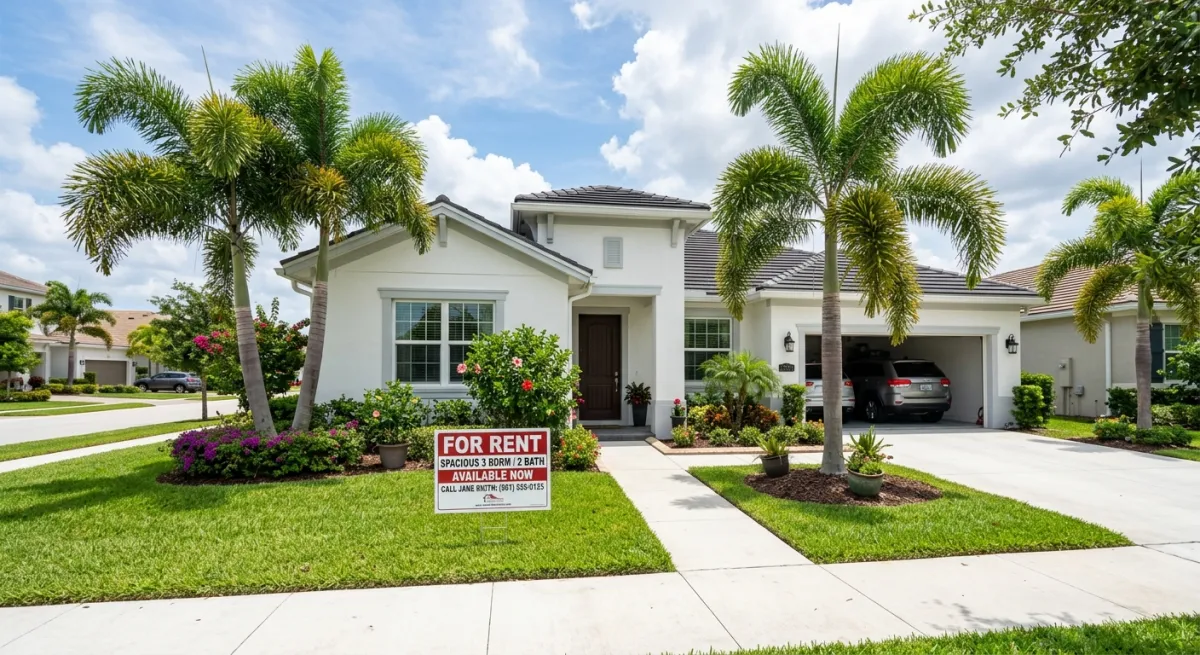
Why Exterior Cleaning Matters More for Rentals
Here's something most landlords in Palm Beach County don't think about enough: the exterior of your rental property matters more than the exterior of your own home.
Sounds backward, right? But think about it. When you live in your own home, you see it every day. You notice the gradual buildup, the slow creep of algae across the driveway, the mold developing on the north wall. You adjust your perception without even realizing it.
Prospective tenants don't get that luxury. They see your property once — during the showing — and they make snap judgments. That first impression sets the tone for everything: whether they apply, how much they're willing to pay, and how they'll treat the property once they move in.
And current tenants? They're looking at other rentals all the time. Online listings, friends' places, properties they drive past. If your rental looks neglected on the outside, they start wondering what else you're neglecting. That's how lease renewals get lost.
The October Timing: Peak Seasonal Rental Turnover
If you own rental properties in Palm Beach Gardens, Jupiter, or West Palm Beach, October is one of the most important months on your calendar.
Why October Matters
Seasonal rental turnover: Many seasonal leases in Palm Beach County run November through April (the "snowbird season"). That means October is when you're turning over properties, listing them, and showing them to prospective seasonal tenants. Annual lease cycles: A significant number of annual leases in our area start or renew on October 1 or November 1. If you're between tenants, October is your window to get the property looking its best before listing. Competition is fierce: Palm Beach County has a healthy rental market, but desirable properties get snapped up quickly during October and November. If your listing photos show a dirty driveway and moldy stucco, you're losing qualified tenants to cleaner-looking properties.The Seasonal Rental Premium
Seasonal rentals in Palm Beach County command a significant premium — often 3-5x the monthly rate of annual rentals for the same property. Seasonal tenants are typically older, wealthier, and more particular about property condition.
They're not just renting a roof. They're renting a lifestyle for four to six months. A property with a gleaming pool deck, bright lanai, and spotless exterior commands top dollar. A property that looks like it baked in the summer sun for five months? They'll keep scrolling.
First Impressions Drive Rental Prices
This isn't opinion — it's economics. Property managers across Palm Beach County consistently report that exterior appearance directly impacts both rental price and time-on-market.
The Numbers
Multiple studies and industry data support what every experienced landlord knows:
- Properties with strong curb appeal rent 7-14% faster than comparable properties with poor exterior appearance
- First impression is the #1 factor in whether a prospective tenant requests a viewing after seeing online photos
- Exterior condition correlates with tenant quality — well-maintained properties attract tenants who maintain their living spaces
What Prospective Tenants Notice First
When a prospective tenant pulls up to your rental property, here's the order they notice things:
1. Driveway and front walkway — stained, cracked, or algae-covered concrete immediately signals neglect 2. Front entry and door — mold around the doorframe, cobwebs, dirty address numbers 3. Landscaping and exterior walls — overgrown bushes, stained stucco, faded paint 4. Pool area (if applicable) — dirty deck, hazy screens, neglected lanai 5. Overall "feel" — does this property feel cared for, or abandoned?
Every one of these is directly addressed by professional exterior cleaning. It's the single highest-impact improvement you can make for the cost.
The Tenant Damage You Might Not Notice
Between tenants is the only time you get full access to assess your property's exterior. And there are specific types of damage that tenants cause (or contribute to) that aren't always obvious:
Grease Stains on Concrete
Tenants grill. That's fine. But grease splatters on concrete and pavers, and over the course of a lease, these stains build up significantly. They don't come out with a garden hose. Professional pressure washing is the only way to remove set-in grease without damaging the surface.
Planter Damage
Tenants put planters on the pool deck, patio, and porch. The bottom of the planter traps moisture against the surface, creating a perfect environment for mold and mineral staining. When the planter is moved, you'll find a ring of discoloration that requires professional treatment.
Pool Deck Wear Patterns
Heavy foot traffic in the same paths creates visible wear patterns on pool decks, especially on textured concrete or pavers. This is normal wear, but it's accelerated by tenants who use the pool daily during summer months.
Parking Area Deterioration
Rental tenants sometimes park in areas you'd prefer they didn't. Oil leaks, tire marks, and repeated driving on the same path create damage that accumulates over the lease term.
General Neglect
Not all tenants maintain exterior spaces the way homeowners do. Spider webs accumulate. Mold grows unchecked. Screens get damaged and aren't reported. Gutters clog. This isn't malicious — it's just the reality that most tenants don't think about exterior maintenance the way owners do.
The Between-Tenant Cleaning Checklist
When a tenant moves out, most landlords focus on the interior: painting, carpet cleaning, appliance servicing. But the exterior deserves equal attention. Here's the between-tenant exterior cleaning checklist:
Immediate Priority (Before Listing Photos)
1. Pressure wash driveway and walkways — this single improvement makes the biggest difference in listing photos and in-person showings 2. Soft wash exterior walls — remove all mold, algae, and staining; reveal any damage that needs repair 3. Clean pool deck and patio — remove all stains, algae, and buildup; restore the surface to safe, clean condition 4. Clean lanai screens and frames — brighten the enclosure; repair any torn screens
Secondary Priority (Before Move-In)
5. Clean gutters and downspouts — functional and aesthetic; prevents water damage during next tenancy 6. Clean fences — addresses organic growth and staining 7. Treat any specific stains — oil spots, rust stains, calcium deposits 8. Clean exterior light fixtures, house numbers, and mailbox — small details that signal attention to care
Repair Items to Address
9. Patch and paint stucco cracks — now visible after cleaning 10. Replace damaged screens — identified during cleaning 11. Reseal pavers if needed — cleaning reveals worn sealant 12. Address drainage issues — any areas where water is pooling or flowing incorrectly
How Regular Maintenance Reduces Long-Term Capital Costs
This is where the business case for exterior cleaning becomes undeniable.
The Deferred Maintenance Trap
Many landlords view exterior cleaning as a "nice to have" — something to do between tenants, maybe once a year if the budget allows. This approach seems cost-effective in the short term but creates a trap:
Year 1: Surfaces are fine. Skip the cleaning. Save $400-600. Year 2: Surfaces are noticeably dirty. Still skip it. Save another $400-600. Algae is established. Year 3: Mold has penetrated stucco. Concrete is etched by organic acids. Pavers are shifting because joint sand has eroded. The cleaning now costs $600-800 because the buildup is severe. Year 5: Stucco needs repair — $2,000-5,000. Driveway concrete is permanently stained and needs resurfacing — $3,000-8,000. Pool deck pavers need to be pulled, releveled, and reset — $5,000-15,000. The math is clear: $400-600 per year in regular cleaning prevents thousands in capital repairs.The Annual Maintenance Contract Advantage
For rental property owners, an annual maintenance contract with a pressure washing company makes financial sense:
- Guaranteed scheduling — you're not scrambling to find availability during the October crunch
- Lower per-visit cost — maintenance pricing is less than one-time deep cleaning
- Consistent property condition — your property never deteriorates to the point where it affects rental value
- Documentation — regular service records demonstrate property maintenance for insurance and liability purposes
- Budgeting simplicity — a known annual cost you can plan for
HOA Compliance for Rental Properties
If your rental property is in an HOA community (and in Palm Beach County, most are), exterior maintenance isn't optional — it's required.
Common HOA Exterior Requirements
- Driveway: Must be free of significant staining and organic growth
- Exterior walls: No visible mold, mildew, or algae
- Roof: Must be clean and in good repair
- Landscaping: Maintained to community standards
- Screens: Must be intact and in good condition
- Paint: Must be in good condition (no peeling, chalking, or significant fading)
The Landlord's Liability
As the property owner, you are responsible for HOA compliance — not your tenant. If your rental property receives violation notices, the fines come to you. And if violations accumulate, the HOA can take escalating action.
Regular exterior cleaning is the simplest way to stay compliant. Most HOA violations for exterior appearance can be resolved with a single professional cleaning visit.
Seasonal Rentals vs. Long-Term: Different Schedules
The cleaning schedule for your rental property depends on how it's occupied.
Seasonal Rental Properties (November-April Occupancy)
- October: Full deep clean before seasonal tenant arrives — this is non-negotiable
- April/May: Post-tenant turnover clean; assess for damage
- July or August: Mid-summer maintenance clean if the property sits vacant (mold grows fast on unoccupied properties with no AC running)
Annual Rental Properties
- Between tenants: Full deep clean (timing varies)
- October: Annual maintenance clean (coordinate with tenant — they can be out for the day)
- Spring: Optional maintenance clean, especially for pool-equipped properties heading into heavy-use season
Vacant Properties (Between Tenants or For Sale)
- Monthly monitoring at minimum — a property sitting vacant in South Florida summer can look abandoned within 60 days
- Full cleaning every 60-90 days if the property will be vacant for an extended period
- Immediate cleaning before any showing, open house, or listing photography session
The ROI Math: It's Not Even Close
Let's run the numbers that matter to landlords.
Scenario: Annual Rental Property in Palm Beach Gardens
Property: 3-bedroom single-family home, average condition Current rent: $2,800/month Annual exterior cleaning cost: $500 (two visits per year) Comparable clean property rent: $2,950-3,000/month The math:- $150/month additional rent x 12 months = $1,800/year in additional revenue
- Minus $500 annual cleaning cost = $1,300 net annual benefit
- ROI: 260%
Scenario: Seasonal Rental Property in Jupiter
Property: 3-bedroom home with pool, good location Current seasonal rate: $4,500/month (November-April) Pre-season deep cleaning cost: $600 Comparable clean property seasonal rate: $5,000-5,200/month The math:- $500/month additional rent x 6 months = $3,000 in additional seasonal revenue
- Minus $600 cleaning cost = $2,400 net benefit
- ROI: 400%
The Vacancy Cost Factor
There's another number that matters even more: vacancy days. Every day your property sits vacant, you lose money. In Palm Beach County:
- Average daily cost of vacancy (annual rental): $90-100
- Average time-on-market for well-maintained property: 15-20 days
- Average time-on-market for poorly maintained property: 35-50 days
- Potential vacancy savings from exterior cleaning: $1,500-3,000 per turnover
The Landlord's Competitive Edge
The Palm Beach rental market is competitive. Tenants have choices. Property managers have options. The landlords who consistently outperform on occupancy rates, rental prices, and tenant quality share a common trait: they maintain their properties proactively.
Exterior cleaning is the most visible, most impactful, and most cost-effective maintenance investment you can make. It's not a luxury — it's a business decision with a measurable return.
A landlord in West Palm Beach called us after a tenant turnover that had gone badly. The tenant had been there for three years, and when she moved out, there was visible mold on the north wall of the exterior, black staining across the back patio, and the driveway looked like it hadn't been touched since move-in. Between the unit cleaning and the exterior work, she had six weeks of vacancy. She put us on an annual maintenance schedule for that property and her other two units. The math on vacancy versus maintenance isn't complicated.
Get a free quote for your rental property from Crouching Tiger Exterior Cleaning. We work with individual landlords and property management companies throughout Palm Beach Gardens, Jupiter, West Palm Beach, and Palm Beach County. Ask about our multi-property discounts and annual maintenance contracts — because smart landlords don't clean properties one at a time.