That White Haze Isn't Going Anywhere on Its Own
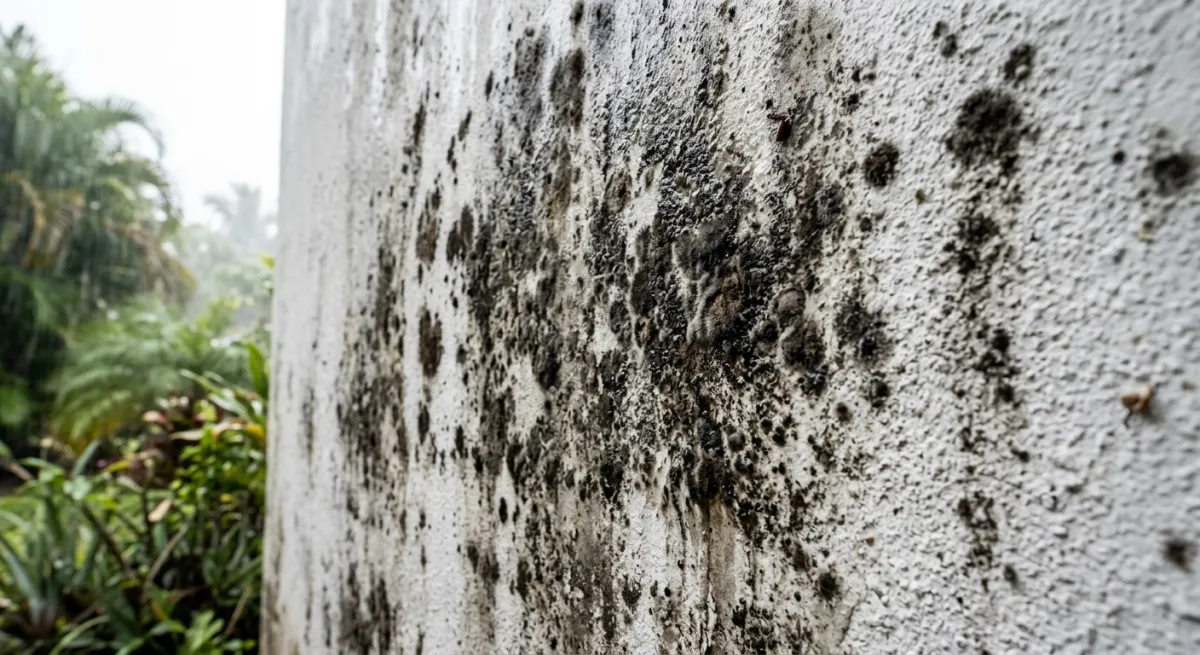
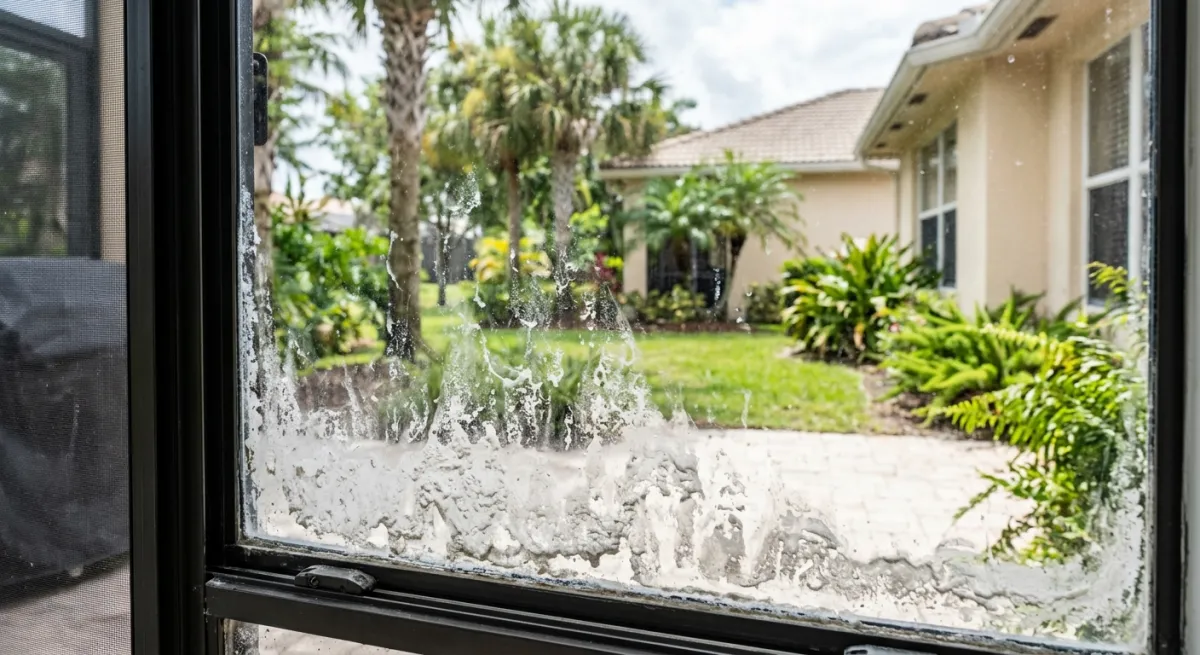
If you've noticed a cloudy, whitish film on your windows that doesn't come off with regular glass cleaner, or crusty white deposits building up on your stucco walls near ground level, you're dealing with hard water stains. And if you live anywhere in Palm Beach County -- from Palm Beach Gardens to West Palm Beach to Jupiter -- this is an extremely common problem.
Hard water stains are one of the most frustrating exterior issues for South Florida homeowners because they look terrible, they resist normal cleaning methods, and they keep coming back unless you address the root cause. Let's dig into what's actually happening, why it's so bad in our area, and what it takes to fix it properly.
Why South Florida Water Is So Hard
First, the science. "Hard water" means water with a high concentration of dissolved minerals, primarily calcium and magnesium. Water hardness is measured in grains per gallon (gpg) or parts per million (ppm).
Here's where South Florida falls on the scale:
| Hardness Level | GPG | PPM |
|---|---|---|
| Soft | 0-3.5 | 0-60 |
| Moderate | 3.5-7.0 | 61-120 |
| Hard | 7.0-10.5 | 121-180 |
| Very Hard | 10.5+ | 181+ |
Most of Palm Beach County's water tests at 15-25 gpg -- solidly in the "very hard" range and often well above it. Some well water in the area can exceed 30 gpg.
The Limestone Aquifer
The reason is geological. South Florida sits on a massive limestone formation -- the Floridan Aquifer and the surficial aquifer system that provides much of our water. As water percolates through limestone (which is primarily calcium carbonate), it dissolves minerals and carries them along.
By the time that water reaches your home -- whether through municipal supply or a private well -- it's loaded with dissolved calcium and magnesium. When that water hits a surface and evaporates, the minerals stay behind. That's your hard water stain.
Common Sources of Hard Water Stains
Hard water stains on your home's exterior almost always come from one of these sources:
1. Irrigation Overspray
This is the #1 culprit. Sprinkler systems that spray onto windows, walls, doors, and other exterior surfaces deposit mineral-rich water repeatedly. Each cycle adds another thin layer of minerals. Over weeks and months, those layers build up into visible white deposits.
The pattern is usually obvious: stains are concentrated at the lower portions of walls and windows, directly in the spray zone of your sprinkler heads. You'll often see a distinct line where the spray reaches -- clean above, stained below.
Well water makes this worse. Municipal water goes through some treatment, but well water comes straight from the aquifer with maximum mineral content. If your irrigation runs on well water (which is common in Palm Beach County to save on utility costs), the mineral content can be significantly higher.
2. Pool Splash and Overflow
Pool water in South Florida is already hard from the fill water. Add chemicals, evaporation (which concentrates minerals), and splash-out, and the water hitting your pool deck, adjacent walls, and nearby windows is extremely mineral-rich.
Hard water stains around pools tend to show up on:
- Glass windscreens or enclosure panels near the pool edge
- The pool deck surface itself (white residue in textured areas)
- Low walls or planter edges adjacent to the pool
- Outdoor furniture stored near the pool
3. Hose Water Residue
When you wash your car, water your garden, or hose off your patio with a regular garden hose, you're using the same hard water. If water droplets sit on glass or painted surfaces and evaporate in the sun, they leave behind mineral spots.
This is why hand-washing your car in the driveway often leaves water spots -- you're essentially creating hard water stains in real time.
4. Gutter Overflow and Downspout Runoff
When gutters overflow during heavy rain, the water running down your walls picks up minerals from the gutter material and deposits them on your stucco or siding. Downspout splash zones at the base of walls are another common spot for mineral buildup.
Why Vinegar and Windex Don't Work
Here's the frustrating part for most homeowners: the cleaning products in your kitchen cabinet aren't going to cut it.
Regular glass cleaner (like Windex) is designed for organic films -- fingerprints, grease, dust. Hard water stains are inorganic mineral deposits. Glass cleaner just slides right over them. Vinegar (acetic acid) is a mild acid that can dissolve light mineral deposits. The problem is that the buildup on South Florida homes is rarely "light." By the time you notice it, you're dealing with layers of deposited calcium carbonate that have been baking in the sun for months. Vinegar might slightly improve the appearance, but it won't fully remove established hard water stains from glass, and it's basically useless on stucco. CLR and similar household products work better than vinegar but still struggle with heavy exterior buildup. They're formulated for indoor fixtures -- faucets, showerheads, tile. The scale of exterior hard water staining is a different animal entirely.Professional Removal Methods
Removing established hard water stains requires the right chemistry and the right technique for each surface type.
On Glass (Windows and Doors)
Specialized acid-based cleaners are used to dissolve mineral deposits on glass. These are typically hydrofluoric acid-based products (at safe, diluted concentrations) or specialized polishing compounds designed for glass restoration.The process involves:
1. Application of the acid cleaner to the stained glass surface 2. Agitation with a non-scratch pad to work the product into the mineral deposits 3. Dwell time for the acid to dissolve the calcium and magnesium 4. Squeegee and rinse to remove the dissolved minerals and product 5. Repeat if necessary for heavy buildup (some windows need 2-3 passes)
Important note: severe, long-term hard water deposits can actually etch glass permanently. The minerals essentially bond with the glass surface at a chemical level. If caught early, the staining is fully removable. If it's been there for years, there may be a permanent haze even after treatment. This is why addressing hard water stains sooner rather than later is important.On Stucco and Painted Surfaces
Stucco presents a different challenge because it's porous and textured. Minerals deposit not just on the surface but down in the pores and texture of the stucco.
Professional treatment for stucco hard water staining typically involves:
1. Low-pressure application of a specialized cleaning solution 2. Mild acid treatment (muriatic acid at appropriate dilution, or specialized stucco cleaners) 3. Careful rinsing -- too much pressure can damage stucco 4. Assessment of staining depth -- some stains require multiple treatments 5. Neutralization to prevent acid damage to the stucco
This is absolutely not a DIY job for most homeowners. The wrong acid concentration or technique can etch stucco, damage paint, and create a problem worse than the original staining.
On Natural Stone
If you have natural stone around your home (travertine pavers, coral stone walls, limestone accents), hard water stains require especially careful treatment. Many acids that work on glass or stucco will damage or etch natural stone. A professional who understands stone chemistry is essential here.
Preventing Future Buildup
Removing hard water stains is only half the battle. If you don't address the source, they'll be back within weeks. Here are the prevention strategies that actually work:
Fix Your Irrigation
This is the most impactful step for most Palm Beach County homeowners.
- Walk your property while each irrigation zone runs and note where water hits the house
- Adjust or replace sprinkler heads so they water landscaping, not your exterior surfaces
- Switch to drip irrigation for beds directly adjacent to windows and walls
- Install rain sensors if you don't have them -- less unnecessary watering means less mineral deposition
- Check for broken or misaligned heads regularly -- they shift over time
Consider a Water Softener
If your home uses well water for both domestic and irrigation purposes, a water softener can significantly reduce mineral content. This is a bigger investment, but it addresses the problem at the source.
For homes on municipal water, softeners for the irrigation system alone are less common but available. The cost-benefit depends on the severity of your staining problem.
Protective Coatings
For glass surfaces that are repeatedly exposed to hard water (like windows near the pool or in sprinkler zones), professional-grade protective coatings can be applied after cleaning. These hydrophobic coatings cause water to bead and roll off the glass rather than sitting and evaporating, which dramatically reduces mineral deposition.
These coatings typically last 1-3 years and can be reapplied as needed.
Regular Maintenance Cleaning
The easiest way to prevent heavy hard water buildup is to not let it get heavy in the first place. If you know certain windows or wall sections are in the splash zone, include them in your regular cleaning schedule. Light deposits that are weeks old are far easier to remove than heavy deposits that have been baking for months.
The Irrigation Audit: A Smart First Step
Before investing in hard water stain removal, we strongly recommend doing a simple irrigation audit:
1. Run each irrigation zone one at a time while you walk the property 2. Mark or photograph every spot where water contacts your home's exterior 3. Check at different times -- wind can change spray patterns 4. Look for evidence of past overspray: mineral deposits, green algae streaks in spray patterns, water staining on concrete 5. Fix what you find before investing in professional stain removal
There's no point in paying to remove hard water stains if your sprinklers are going to recreate them next week. Fix the source first, then address the existing damage.
Don't Let Mineral Deposits Become Permanent
Hard water stains are one of those problems that get exponentially harder to fix the longer you wait. What starts as a faint haze on your windows becomes an opaque white film. What starts as a light dusting on your stucco becomes a thick crust.
The mineral deposits also create a rough surface that traps dirt, mold, and other contaminants, making the staining look even worse and making future cleaning more difficult.
If you've noticed hard water staining on your windows, walls, or other exterior surfaces, the time to address it is now -- not next year when it's twice as bad and potentially permanent.
We get called in regularly after homeowners try to clean mineral deposits themselves with vinegar or grocery-store cleaners and end up etching the glass. The problem isn't effort -- it's chemistry. The wrong acid at the wrong concentration can score the surface permanently. We had a job last year in Palm Beach Gardens where the homeowner had worked on the windows for a weekend and made the staining worse. The glass was salvageable, but only barely.
Get your free quote for professional hard water stain removal. We'll assess the severity of the staining, identify the source, and recommend both a removal plan and a prevention strategy so you're not dealing with the same problem again in six months.